

Organic cotton bedding is valued for its exceptional softness, breathability, and environmentally responsible production. Whether used in homes, hotels, or premium hospitality settings, proper care is essential to preserve its comfort, appearance, and durability. With the right washing and storage practices, high-quality organic cotton sheets, duvet covers, pillowcases, and comforters can provide years of reliable performance.
This guide explains the best practices for maintaining organic cotton bedding while protecting its natural fibers and extending its lifespan.
- Why Organic Cotton Requires Proper Care
- Wash Before First Use
- Choose a Gentle Detergent
- Wash with Cold or Warm Water
- Separate Bedding by Color
- Avoid Overloading the Washing Machine
- Dry Bedding Carefully
- Iron Only When Necessary
- Store Bedding Properly
- Treat Stains Promptly
- Rotate Bedding Regularly
- Sustainable Care Practices
- Why Choose Yintex Organic Cotton Bedding
- Conclusion
Why Organic Cotton Requires Proper Care
Unlike some conventional textiles treated with heavy chemical finishes, organic cotton is produced using environmentally responsible farming methods and processed with fewer harmful chemicals. This allows the fabric to remain naturally soft and breathable but also means it benefits from gentle care.
Proper maintenance helps:
- Preserve fabric softness
- Maintain color and texture
- Reduce fiber wear
- Extend product lifespan
- Minimize environmental impact
Following the manufacturer’s care instructions is always recommended, especially for premium bedding collections.
Wash Before First Use
New organic cotton bedding should be washed before its first use.
This initial wash helps:
- Remove packaging dust
- Relax the natural fibers
- Improve softness
- Enhance moisture absorbency
Use a mild detergent and cold or warm water rather than hot water.
Choose a Gentle Detergent
Organic cotton performs best with mild, biodegradable detergents that are free from harsh chemicals.
Avoid detergents containing:
- Chlorine bleach
- Optical brighteners
- Strong artificial fragrances
- Fabric-damaging enzymes
A gentle detergent protects the fibers while maintaining the natural feel of the fabric.
Wash with Cold or Warm Water
High washing temperatures can gradually weaken cotton fibers and cause shrinkage.
Recommended washing temperatures:
- Cold water (20–30°C): Best for regular cleaning and color preservation
- Warm water (30–40°C): Suitable for deeper cleaning
- Hot water: Only when necessary for hygiene requirements and if recommended on the care label
Using lower temperatures also reduces energy consumption.
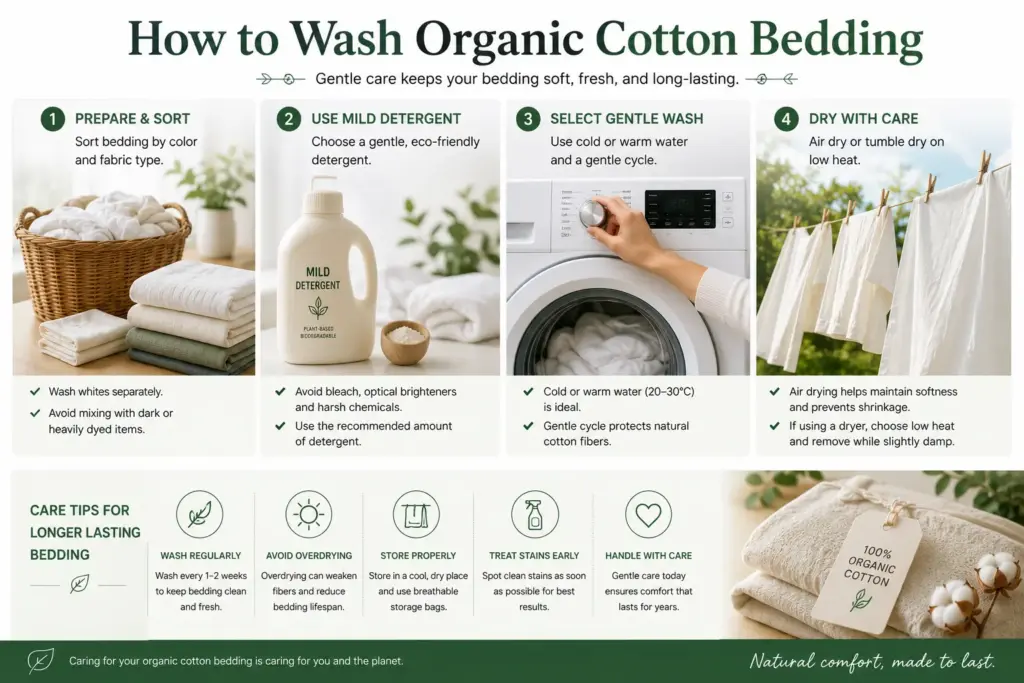
Separate Bedding by Color
To maintain a clean appearance:
- Wash white bedding separately
- Separate dark and light colors
- Avoid washing with heavily dyed garments
Proper sorting prevents color transfer and keeps bedding looking fresh.
Avoid Overloading the Washing Machine
Organic cotton needs sufficient room for water circulation during washing.
An overloaded machine may:
- Reduce cleaning effectiveness
- Increase fabric friction
- Cause wrinkles
- Accelerate wear
Leave enough space for the bedding to move freely inside the drum.
Dry Bedding Carefully
Air drying is the gentlest option for organic cotton bedding.
If using a dryer:
- Select a low-heat setting
- Remove bedding while slightly damp
- Smooth the fabric before folding or placing back on the bed
Excessive heat can contribute to shrinkage and shorten the fabric’s lifespan.
Iron Only When Necessary
Many organic cotton fabrics develop a relaxed, natural appearance after washing.
If ironing is preferred:
- Use a medium cotton setting
- Iron while the fabric is slightly damp
- Avoid excessive heat on decorative finishes
For many modern bedding styles, ironing is optional.
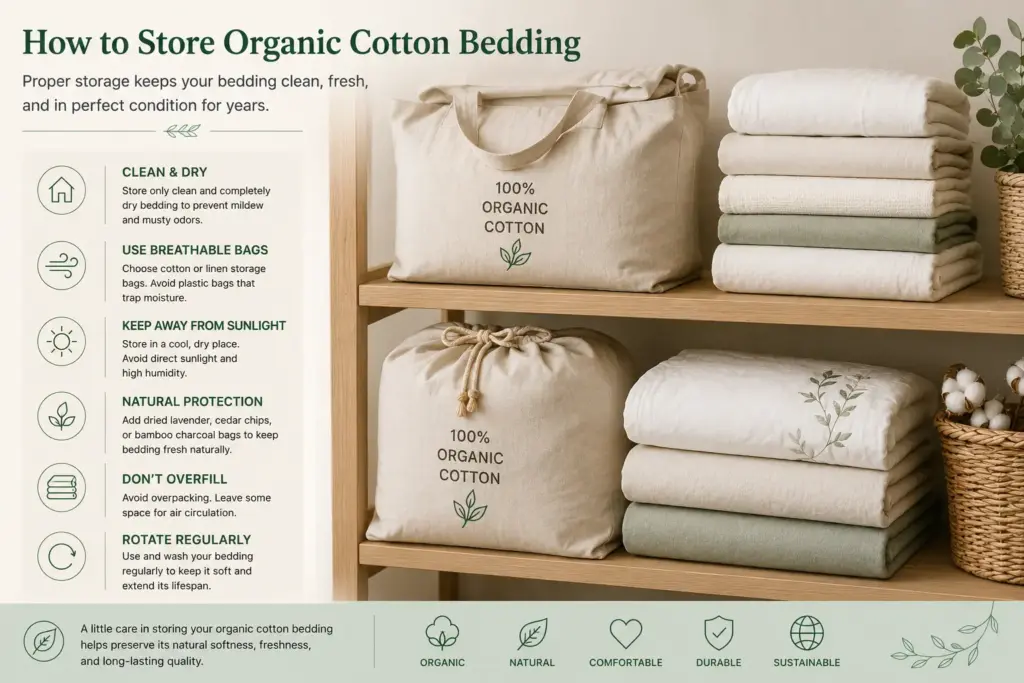
Store Bedding Properly
Clean bedding should be stored in a cool, dry location.
Avoid:
- Plastic storage bags that trap moisture
- Direct sunlight
- Damp environments
Breathable cotton storage bags are ideal for long-term storage.
Treat Stains Promptly
The sooner stains are treated, the easier they are to remove.
For most everyday stains:
- Blot the stain immediately.
- Apply a mild stain remover or gentle detergent.
- Wash according to the care instructions.
Avoid using strong bleach, which may damage organic cotton fibers.
Rotate Bedding Regularly
Using multiple bedding sets allows each set to rest between washes.
Rotation helps:
- Reduce overall wear
- Extend fabric lifespan
- Maintain consistent appearance
- Improve long-term value
Many hotels and premium households rotate bedding as part of routine maintenance.
Sustainable Care Practices
Caring for organic cotton responsibly also supports sustainability.
Simple habits include:
- Washing only full loads
- Using eco-friendly detergents
- Washing at lower temperatures
- Air drying whenever possible
- Avoiding unnecessary rewashing
These practices reduce water and energy consumption while helping preserve the quality of the bedding.
Why Choose Yintex Organic Cotton Bedding
Yintex manufactures premium organic cotton bedding designed for retailers, hospitality providers, wholesalers, and private-label brands worldwide.
Our capabilities include:
- Organic cotton sheets and duvet covers
- Comfortable pillowcases and bedding sets
- OEM and private-label manufacturing
- Sustainable material sourcing
- Strict quality control
- Flexible customization options
By combining premium materials with advanced manufacturing expertise, Yintex delivers bedding solutions that offer lasting comfort, durability, and environmental responsibility.
Conclusion
Organic cotton bedding offers exceptional comfort, breathability, and sustainability, but proper care is essential to maximize its performance. Gentle washing, appropriate drying, careful storage, and regular maintenance will help preserve its softness and extend its lifespan.
For businesses and consumers alike, investing in quality organic cotton bedding—and caring for it correctly—ensures long-term value and a consistently comfortable sleep experience.
 English
  Deutsch
  Español
  Français
  Português
  日本語
日本語  한국어
한국어  العربية
Leave a Reply