
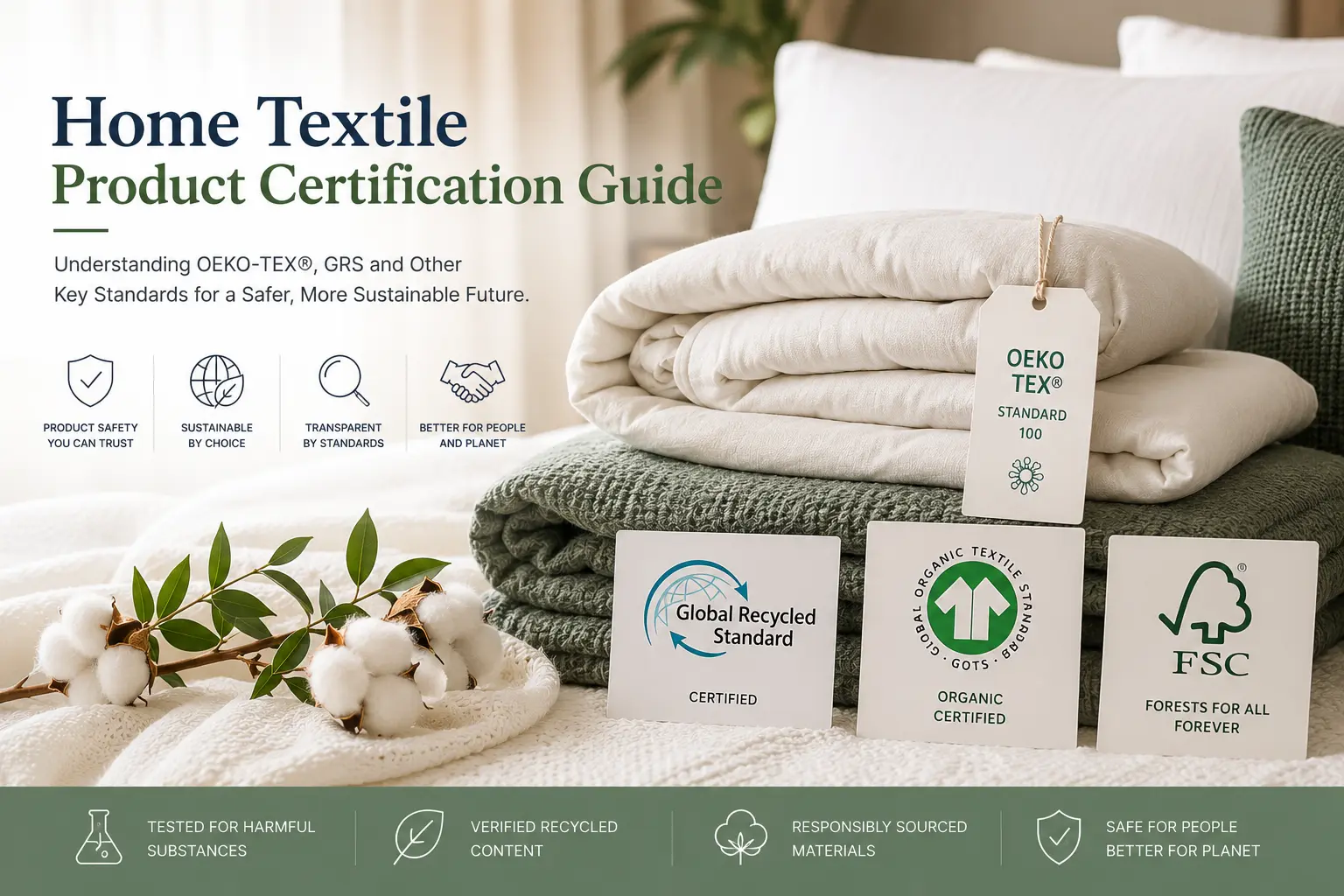
As global consumers and B2B buyers become increasingly focused on product safety, sustainability, and supply chain transparency, certifications have become a critical competitive factor in the home textile industry.
For manufacturers, retailers, hospitality brands, and sourcing professionals, certifications are no longer just labels—they are strategic trust signals that influence procurement decisions, regulatory compliance, and brand positioning.
This guide explains the most important home textile certifications, including OEKO-TEX®, GRS, and related standards, and explores how they impact product safety, environmental responsibility, and commercial value.
- Why Certifications Matter in the Home Textile Industry
- OEKO-TEX® Standard 100: The Benchmark for Product Safety
- GRS (Global Recycled Standard): Verifying Recycled Content
- Organic Certifications: GOTS and Organic Cotton Standards
- FSC Certification for Wood-Based Fibers
- Certifications and Supply Chain Transparency
- How Certifications Impact Product Quality
- Choosing the Right Certified Home Textile Products
- Yintex’s Commitment to Certified Quality
- Conclusion
Why Certifications Matter in the Home Textile Industry
Home textile products come into direct and prolonged contact with human skin. As a result, buyers are increasingly concerned about:
- Harmful chemical residues
- Fabric safety for babies and sensitive skin
- Environmental impact of production
- Ethical and transparent sourcing
- Compliance with international regulations
Certifications help validate product claims through independent third-party testing and auditing.
For B2B buyers, certified products also reduce sourcing risks and improve market credibility.
OEKO-TEX® Standard 100: The Benchmark for Product Safety
What Is OEKO-TEX® Standard 100?
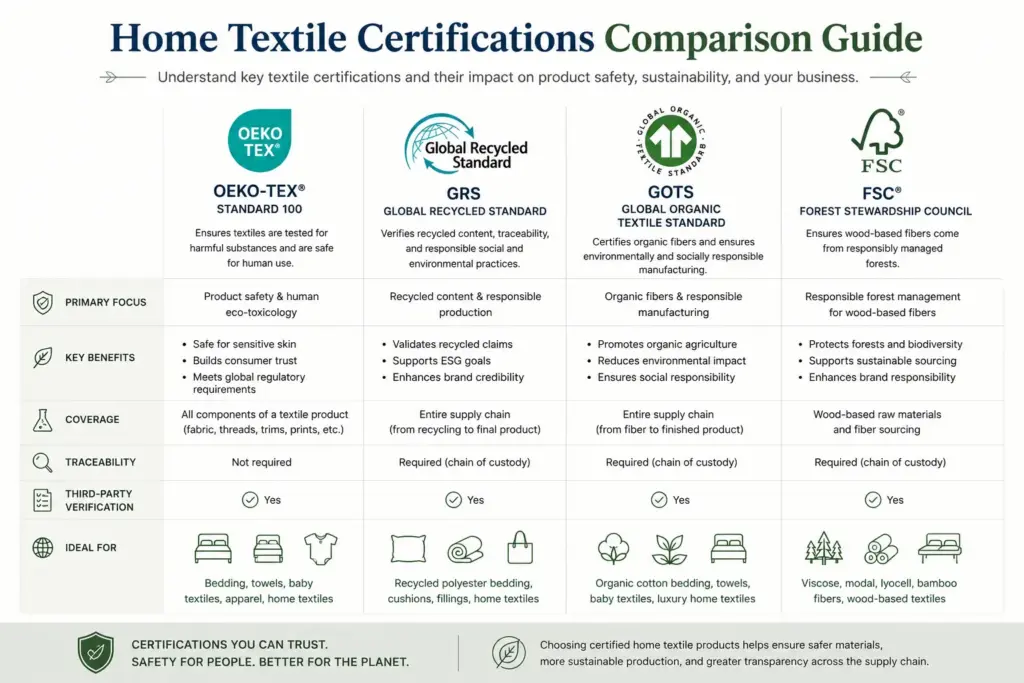
OEKO-TEX® Standard 100 is one of the world’s most recognized textile safety certifications.
It verifies that every component of a textile product—including fabric, thread, buttons, zippers, and prints—has been tested for harmful substances.
Why OEKO-TEX® Matters
The certification focuses on human ecological safety, ensuring products are free from dangerous levels of:
- Formaldehyde
- Heavy metals
- Pesticides
- Harmful dyes
- Allergenic chemicals
This is especially important for:
- Bedding
- Baby textiles
- Pillowcases
- Mattress protectors
- Towels
Business Benefits of OEKO-TEX® Certification
For brands and retailers:
- Builds consumer trust
- Supports premium positioning
- Improves export competitiveness
For hospitality buyers:
- Enhances guest safety assurance
- Aligns with wellness-focused branding
- Helps meet procurement compliance standards
OEKO-TEX® certification has increasingly become a baseline requirement in European and North American markets.
GRS (Global Recycled Standard): Verifying Recycled Content
What Is GRS?
Textile Exchange developed the Global Recycled Standard (GRS) to verify recycled materials and responsible production practices.
GRS certification confirms:
- Recycled material content
- Chain of custody traceability
- Environmental processing standards
- Social and chemical compliance
Why GRS Is Important
As sustainability initiatives accelerate, many brands now require recycled content verification for ESG reporting and environmental claims.
GRS-certified products help prevent:
- Greenwashing
- False recycled-content claims
- Unverified supply chain sourcing
Applications in Home Textiles
GRS is commonly applied to:
- Recycled polyester bedding
- Cushion fillings
- Mattress toppers
- Recycled fiber comforters
For manufacturers, GRS certification creates opportunities in:
- Sustainable retail collections
- Eco-conscious hospitality programs
- Corporate procurement contracts
Organic Certifications: GOTS and Organic Cotton Standards
Understanding GOTS
Global Organic Textile Standard (GOTS) is considered the gold standard for organic textiles.
It covers:
- Organic fiber sourcing
- Environmentally responsible processing
- Social compliance standards
- Restricted chemical usage
To carry the GOTS label, products must meet strict organic fiber thresholds.
Why Organic Certifications Matter
Organic certifications are increasingly associated with:
- Luxury wellness branding
- Eco-conscious consumer segments
- Infant and sensitive-skin products
They also support broader sustainability narratives in retail and hospitality sectors.
FSC Certification for Wood-Based Fibers
Wood-based fibers such as viscose, modal, and lyocell are widely used in modern bedding products.
Forest Stewardship Council (FSC) certification ensures that wood pulp used in textile production comes from responsibly managed forests.
This certification is particularly relevant for:
- TENCEL™ products
- Bamboo-derived fibers
- Sustainable cellulose textiles
Certifications and Supply Chain Transparency
Traceability Is Becoming Essential
Modern procurement increasingly requires visibility beyond the finished product.
Buyers now evaluate:
- Raw material origin
- Chemical management systems
- Factory audit compliance
- Carbon footprint reporting
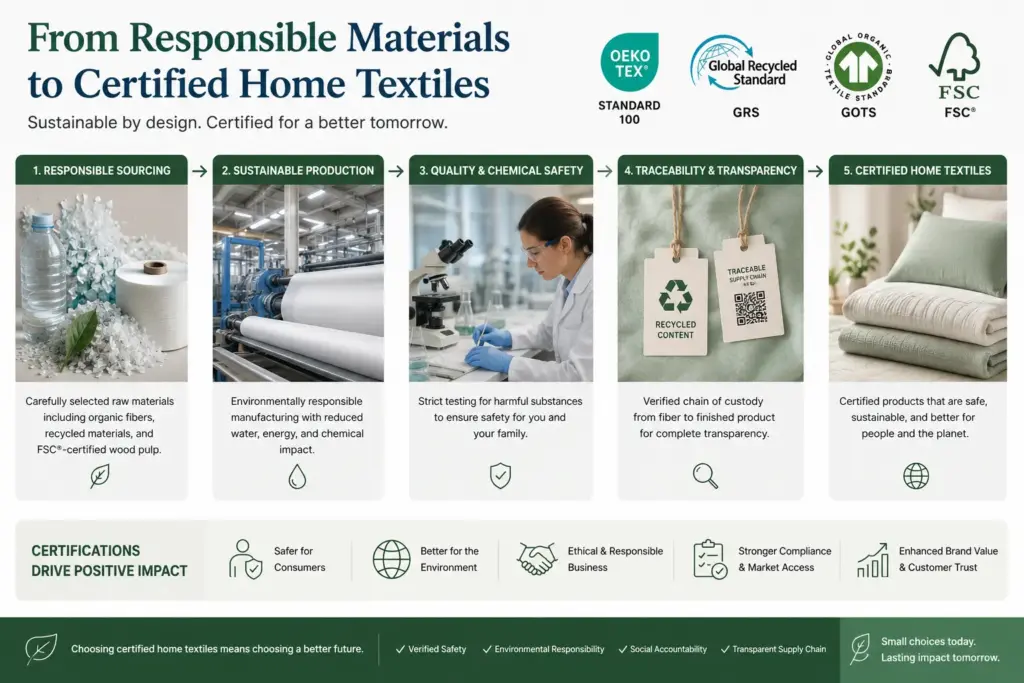
Certifications provide a structured framework for supply chain transparency and accountability.
The Rise of ESG Procurement
Large retailers and hotel groups increasingly integrate ESG metrics into supplier evaluations.
Certified products help businesses:
- Improve sustainability reporting
- Reduce reputational risk
- Meet corporate environmental goals
In many cases, certifications are becoming prerequisites for long-term supplier partnerships.
How Certifications Impact Product Quality
While certifications primarily focus on safety and sustainability, they often correlate with higher manufacturing standards.
Certified factories typically maintain:
- Better quality control systems
- Stronger chemical management
- More consistent production processes
- Improved documentation and traceability
This contributes to greater product reliability and lower operational risk.
Choosing the Right Certified Home Textile Products
When evaluating certified products, buyers should consider:
Certification Scope
Ensure certifications apply to the finished product—not just raw materials.
Certification Validity
Always verify certification numbers through official databases.
Market Alignment
Different markets prioritize different certifications:
- Europe: OEKO-TEX®, GOTS
- North America: OEKO-TEX®, GRS
- Luxury hospitality: OEKO-TEX® + organic standards
Product Positioning
Premium and wellness-focused brands often benefit more from sustainability certifications.
Yintex’s Commitment to Certified Quality
Yintex focuses on delivering home textile products that align with modern global sourcing standards.
The company supports clients through:
- Certified material sourcing options
- Sustainable manufacturing solutions
- Quality-focused production management
- Flexible customization for international markets
By integrating safety, sustainability, and performance into product development, Yintex helps partners strengthen both market competitiveness and consumer trust.
Conclusion
Certifications such as OEKO-TEX®, GRS, GOTS, and FSC have become essential components of modern home textile sourcing.
They provide:
- Independent product safety validation
- Sustainability credibility
- Supply chain transparency
- Competitive differentiation
As global regulations and consumer expectations continue to evolve, certified home textile products will play an increasingly important role in long-term business success.
 English
  Deutsch
  Español
  Français
  Português
  日本語
日本語  한국어
한국어  العربية
Leave a Reply