
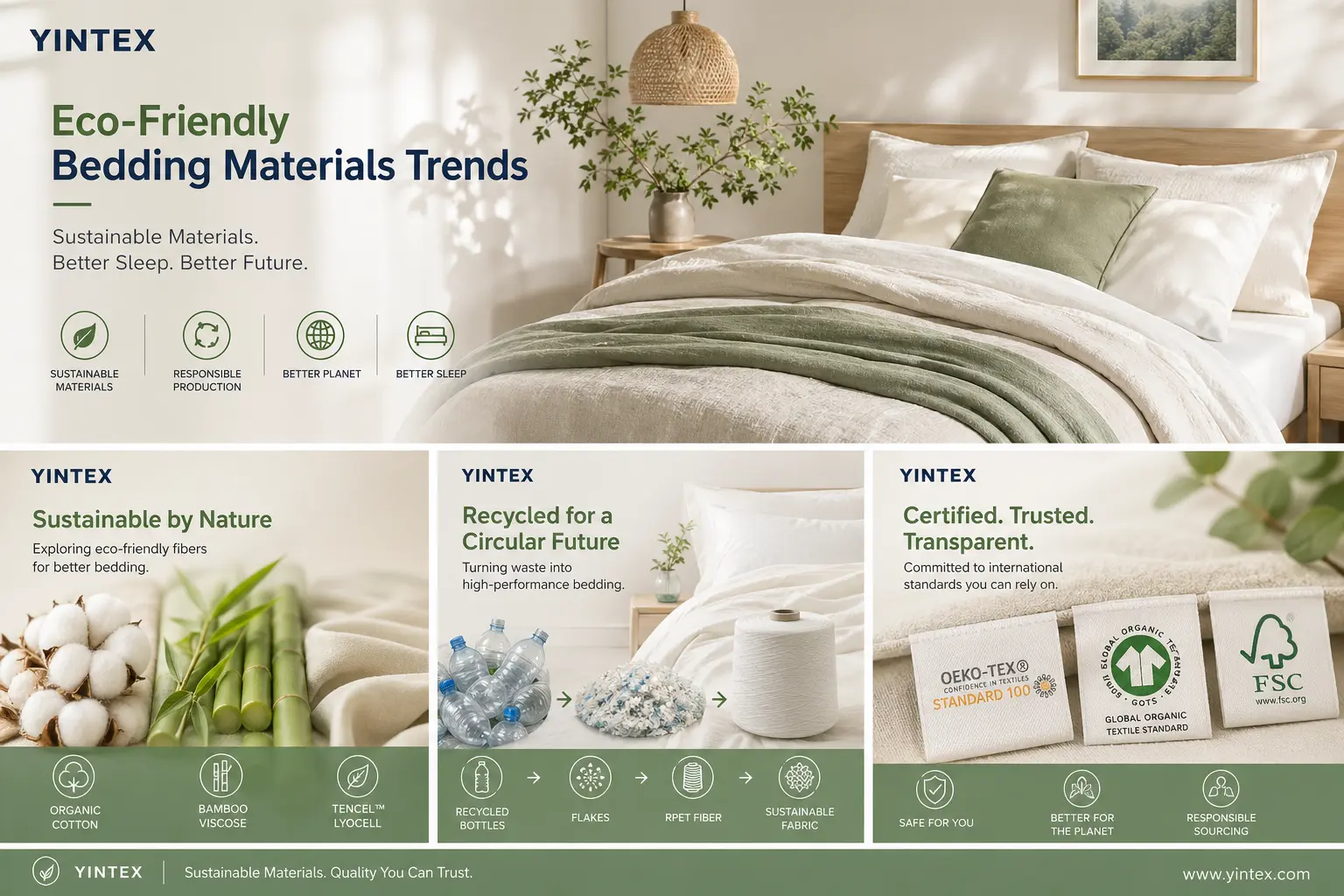
As sustainability evolves from a marketing angle into a core procurement requirement, the bedding industry is undergoing a structural shift. For B2B buyers—especially in hospitality, retail, and e-commerce—eco-friendly bedding materials are no longer optional; they are a strategic lever for brand differentiation, compliance, and long-term cost optimization.
This article outlines the major material trends redefining sustainable bedding and how manufacturers like Yintex are aligning product development with global environmental standards.
The Business Case for Sustainable Bedding
Sustainability is increasingly tied to measurable business outcomes. Buyers are prioritizing:
- Regulatory compliance (EU Green Deal, U.S. sustainability standards)
- ESG reporting requirements
- Consumer demand for transparency and eco-labeling
- Lifecycle cost reduction through durability and recyclability
In this context, material selection becomes a high-impact decision point across the supply chain.
Key Eco-Friendly Bedding Materials Trends
Organic Cotton: From Commodity to Certified Standard
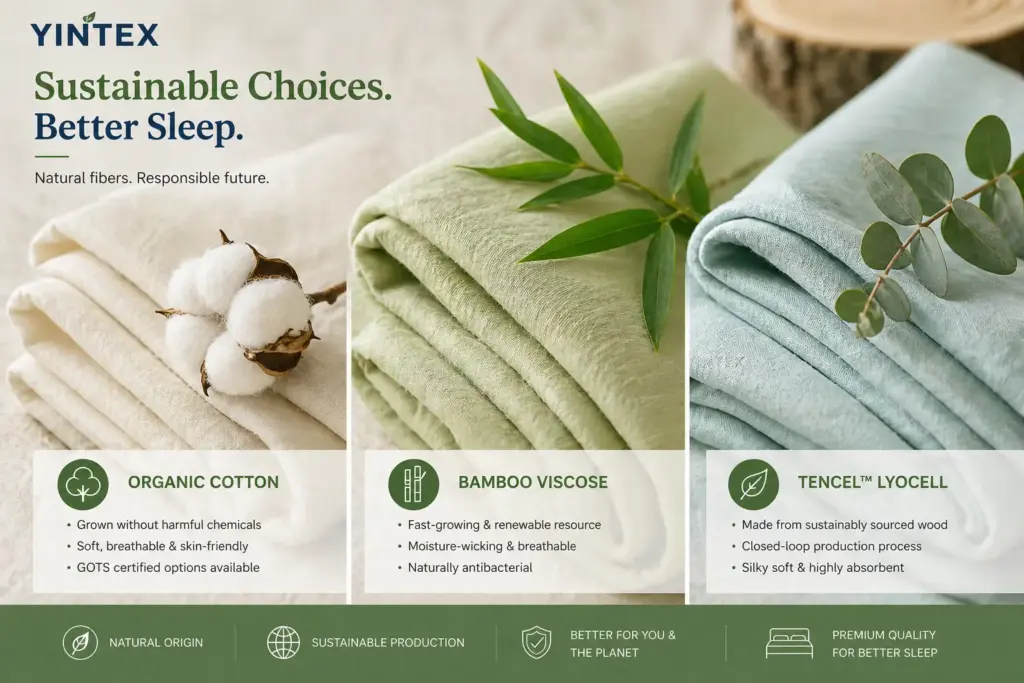
Organic cotton continues to dominate the sustainable bedding segment. Unlike conventional cotton, it is cultivated without synthetic pesticides or fertilizers, significantly reducing environmental impact.
Strategic advantages:
- GOTS (Global Organic Textile Standard) certification enhances brand trust
- Skin-friendly and hypoallergenic properties
- Strong compatibility with premium hospitality positioning
However, supply chain traceability and certification authenticity are becoming critical evaluation factors for B2B buyers.
Bamboo Viscose: Performance Meets Sustainability
Bamboo-derived fabrics are gaining traction due to their fast-growing raw material base and functional performance.
Key value propositions:
- Moisture-wicking and temperature regulation
- Natural antibacterial properties
- Softness comparable to high-thread-count cotton
That said, procurement teams are increasingly scrutinizing the chemical processing involved in viscose production. Closed-loop systems are emerging as a competitive differentiator.
Linen (Flax): Low-Impact Luxury
Linen, derived from flax fibers, is positioned as a premium sustainable material due to its minimal water and pesticide requirements.
Market positioning benefits:
- Exceptional durability (lower replacement frequency)
- Natural texture aligned with “eco-luxury” branding
- Strong appeal in boutique hotels and high-end retail
Its higher upfront cost is offset by long lifecycle performance, making it attractive for total cost of ownership (TCO) optimization.
Recycled Polyester: Circular Economy in Action
Recycled polyester (rPET), typically sourced from post-consumer plastic bottles, represents a scalable solution for reducing waste.
Commercial advantages:
- Cost-effective compared to natural fibers
- High durability and wrinkle resistance
- Supports circular economy narratives
Blended fabrics (e.g., cotton + rPET) are increasingly used to balance sustainability, performance, and cost.
TENCEL™ (Lyocell): Closed-Loop Innovation
TENCEL™, a branded lyocell fiber, is produced from sustainably sourced wood pulp using a closed-loop process that recycles water and solvents.
Differentiation factors:
- Biodegradable and compostable
- Silky texture with high moisture absorption
- Strong alignment with premium eco-conscious branding
This material is particularly popular in luxury bedding collections and wellness-focused product lines.
Emerging Material Innovations to Watch
Looking ahead, several next-generation materials are gaining attention:
- Hemp fibers: Extremely durable with low environmental footprint
- Soy-based fabrics: Byproduct utilization from the food industry
- Recycled blends: Combining multiple waste streams into functional textiles
While still in early adoption phases, these materials represent future opportunities for differentiation.
Certification and Transparency: A New Competitive Baseline
Material sustainability alone is no longer sufficient—verification is essential. Key certifications influencing purchasing decisions include:
- GOTS (Global Organic Textile Standard)
- OEKO-TEX® Standard 100
- FSC (Forest Stewardship Council) for wood-based fibers
Digital product passports and blockchain-based traceability are also emerging as next-generation solutions for supply chain transparency.
Yintex’s Approach to Sustainable Bedding
At Yintex, sustainability is integrated into product development, not treated as an afterthought. As a B2B-focused bedding manufacturer, Yintex delivers:
- Customizable eco-friendly material options (organic cotton, bamboo blends, TENCEL™)
- Scalable production aligned with international compliance standards
- Flexible MOQ and private labeling for global partners
By aligning material innovation with manufacturing excellence, Yintex supports clients in achieving both sustainability goals and commercial performance.
Conclusion: Sustainability as a Strategic Differentiator
Eco-friendly bedding materials are redefining industry benchmarks across performance, compliance, and brand value. For procurement leaders and product managers, the focus is shifting from “whether to adopt” to “how to optimize.”
Organizations that proactively integrate sustainable materials into their product portfolios will not only meet regulatory and consumer expectations but also secure a long-term competitive advantage.
 English
  Deutsch
  Español
  Français
  Português
  日本語
日本語  한국어
한국어  العربية
Leave a Reply