In today’s competitive home textile and hospitality markets, wholesale bedding is not just about bulk pricing — it’s about reliable supply, consistent quality, and brand trust. Whether you’re a hotel operator, retailer, or distributor, choosing the right wholesale bedding supplier can impact your customer satisfaction, return rates, and brand reputation.
This guide walks you through what wholesale bedding really involves, what to look for in a supplier, and how to ensure you’re getting the best value in both product and partnership.
In the world of bedding, the duvet cover is often underestimated. Yet this single textile layer plays a pivotal role in both aesthetics and performance. Whether you’re curating a luxury hotel suite, supplying retail collections, or managing institutional linen, understanding duvet covers is essential to delivering superior sleep experiences.
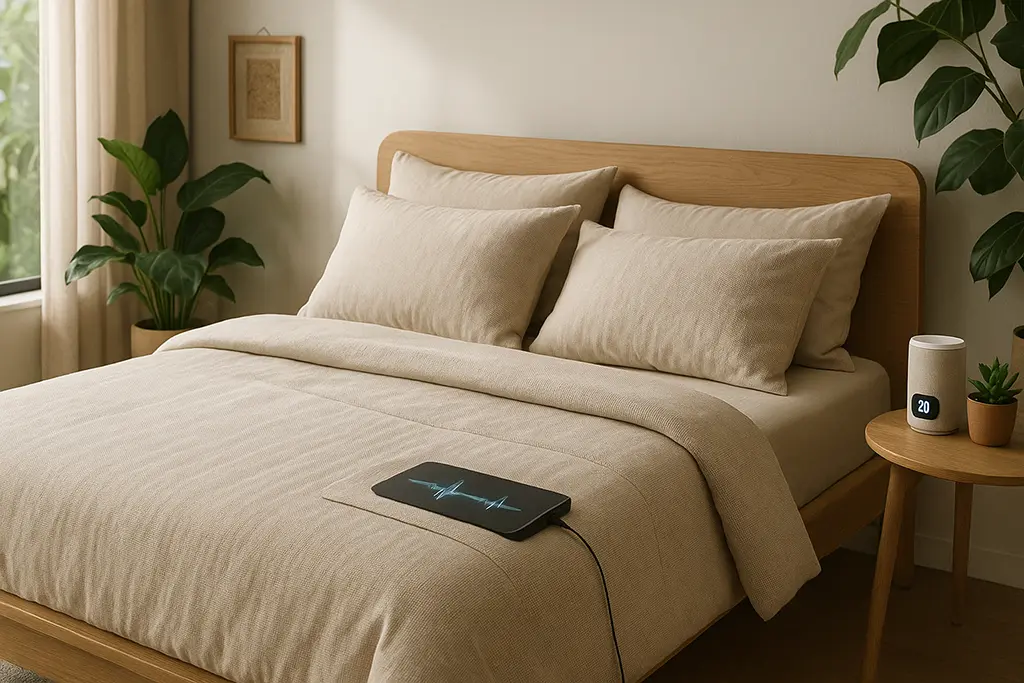
In 2025, the global bedding industry is no longer driven by comfort alone—technological innovation, temperature regulation, and smart textile integration are setting new benchmarks. From AI-powered sleep tracking to moisture-wicking fibers inspired by sports science, a new wave of bedding manufacturers is transforming how we define quality rest.
The bedding industry, long rooted in tradition and craftsmanship, is undergoing a quiet but powerful transformation. Artificial intelligence (AI) and automation are emerging as game-changers, reshaping how bedding products like comforters, pillows, mattress toppers, and sheet sets are designed, produced, and delivered. From smarter production lines to personalized design recommendations, these technologies are improving efficiency, reducing waste, and enhancing product quality.
In this article, we explore how AI and automation are redefining the future of bedding manufacturing—and why businesses should pay close attention.
When the temperature rises, a good night’s sleep often depends on one simple thing: your bedsheet. Not all bedsheet fabrics are created equal when it comes to staying cool and comfortable in the summer. In this guide, we’ll explore the coolest bedsheet fabrics for hot sleepers and warm weather, including their pros and cons, so you can choose the best material for your needs.
The coolest bedsheet fabrics have a few things in common:
Breathability: Allows air to circulate and body heat to escape.
Moisture-wicking: Pulls sweat away from the skin to keep you dry.
Lightweight: Feels airy and soft, not heavy or clingy.
1. Linen – The Champion of Summer Bedding
Why it sleeps cool:
Linen is made from the flax plant and is naturally breathable, moisture-wicking, and temperature-regulating. It has a loose weave that lets air flow freely.
Pros:
Extremely breathable
Gets softer with each wash
Hypoallergenic and antimicrobial
Durable and long-lasting
Cons:
Can feel rough at first
Wrinkles easily
Typically more expensive than cotton
Best for: Hot sleepers and those looking for a luxury, eco-friendly option.
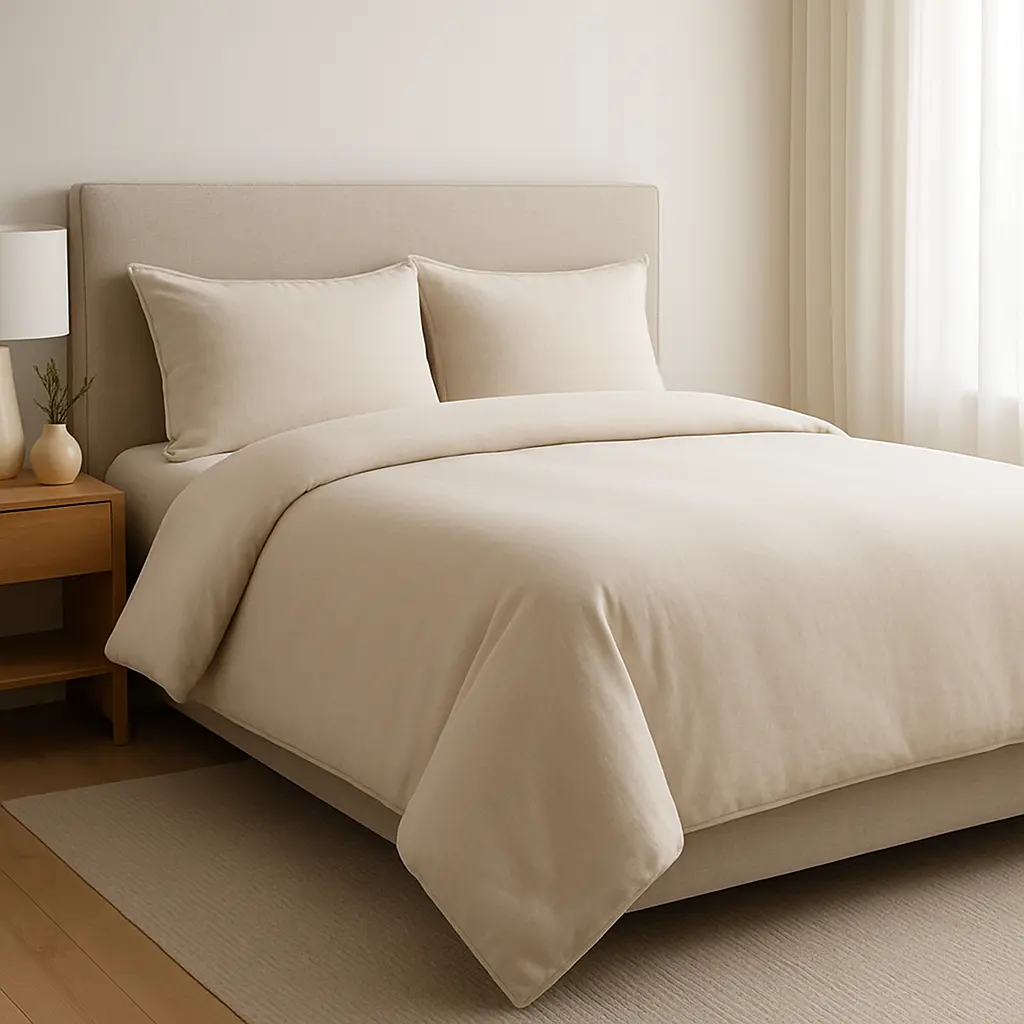
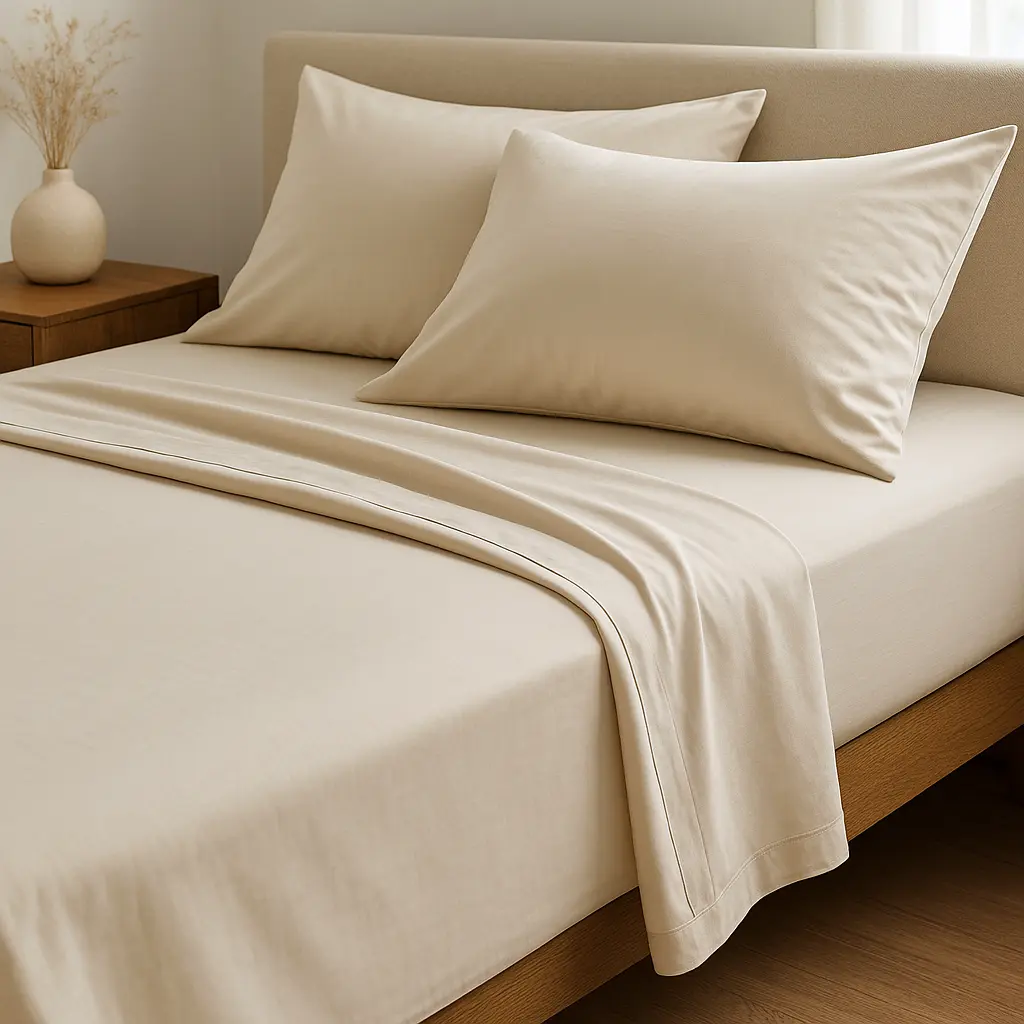
Breathable linen bedsheet
2. Cotton (Especially Percale Weave)
Why it sleeps cool:
Cotton is a classic fabric, but not all weaves are equal. Percale cotton has a crisp, matte finish and a tight weave that feels cool to the touch.
Pros:
Highly breathable and soft
Affordable and widely available
Easy to care for
Cons:
Not as moisture-wicking as linen or bamboo
Some weaves (like sateen) can trap heat
Best for: Anyone looking for comfortable, breathable sheets at a moderate price.
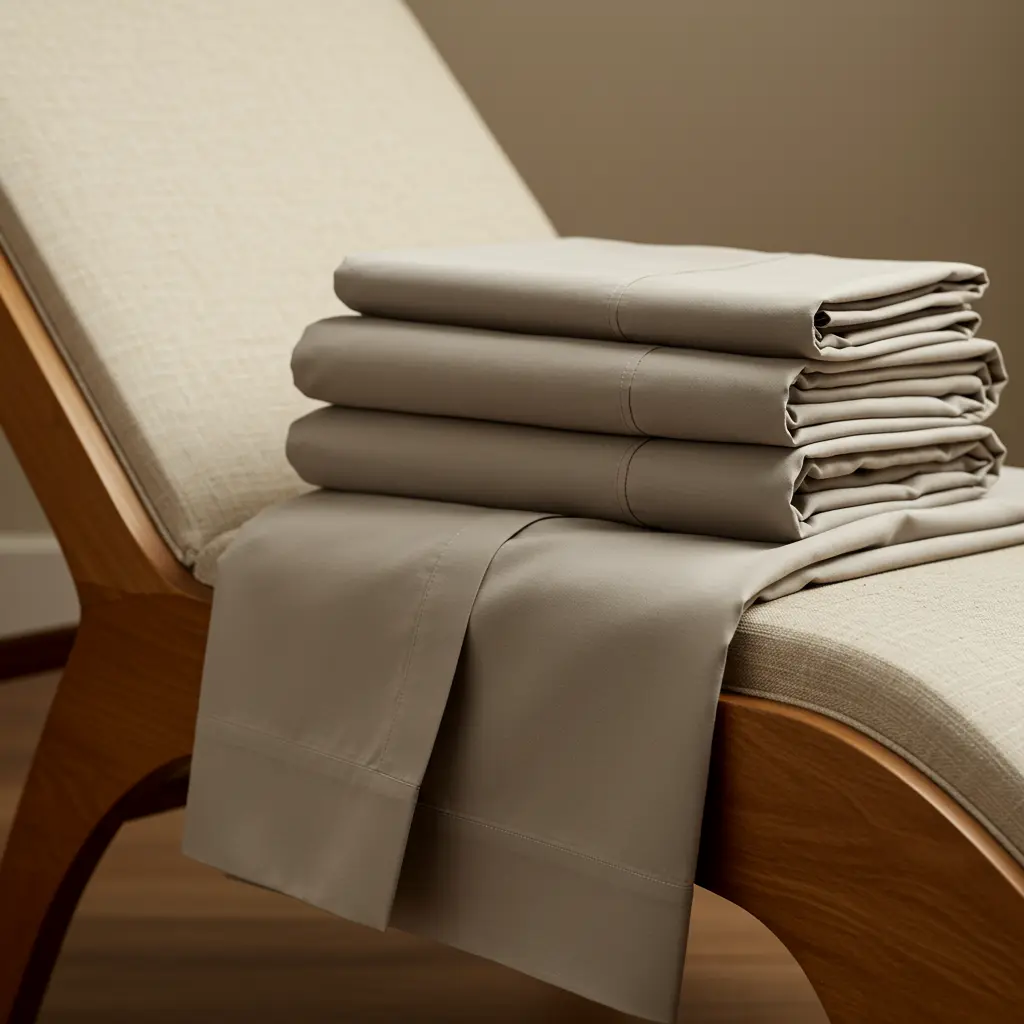
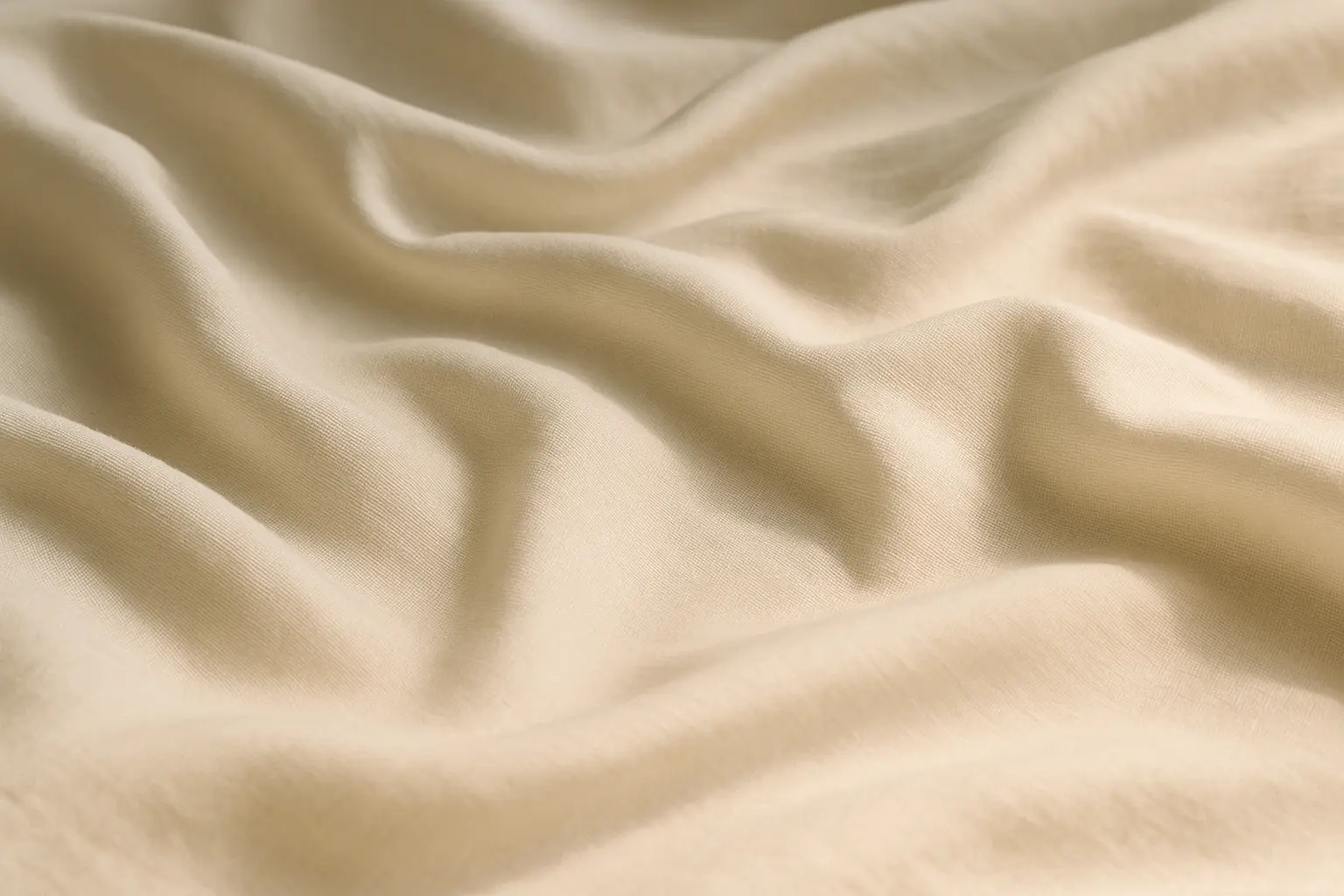
cotton percale bedsheet fabric with tight weave
3. Bamboo (Viscose from Bamboo)
Why it sleeps cool:
Bamboo-derived fabrics are ultra-soft and known for their excellent moisture-wicking abilities and natural temperature regulation.
Pros:
Silky-smooth texture
Naturally hypoallergenic
Wicks away moisture better than cotton
Eco-friendly when sustainably made
Cons:
Can be more expensive than cotton
Manufacturing process can vary (choose OEKO-TEX® certified for safety)
Best for: Sweaty sleepers and those with sensitive skin.
4. Tencel (Lyocell)
Why it sleeps cool:
Tencel is made from eucalyptus wood pulp. It has a smooth, breathable structure that regulates temperature and resists moisture buildup.
Pros:
Ultra-soft and lightweight
Great at moisture absorption
Eco-friendly closed-loop manufacturing
Resistant to bacteria and odor
Cons:
Pricier than basic cotton
Can pill over time if not cared for properly
Best for: Eco-conscious shoppers and those who love silky sheets.
5. Blends (Cotton-Linen, Cotton-Bamboo, etc.)
Why they can sleep cool:
Blends combine the best features of multiple fabrics—such as the softness of cotton and the breathability of linen.
Pros:
Often more affordable than 100% linen or bamboo
Balanced texture and breathability
Less likely to wrinkle
Cons:
Quality depends on the ratio and weave
May not be as cooling as pure materials
Best for: People who want a balance between comfort, coolness, and price.
Fabrics to Avoid for Summer
Flannel – Too heavy and warm
Microfiber – Often traps heat and doesn’t breathe well
Polyester – Not breathable or moisture-wicking
Final Thoughts: What’s the Coolest Bedsheet Fabric?
If your top priority is sleeping cool, linen is hard to beat for airflow and moisture-wicking. For a silky-smooth and breathable feel, bamboo or Tencel sheets are excellent choices. And if you prefer crisp, hotel-style sheets, go with 100% cotton percale.
Ultimately, the best fabric for your summer bedsheets depends on your sleep preferences, skin sensitivity, and budget.
Looking for high-quality summer bedding?
We offer a curated range of breathable, eco-friendly bedsheets made from linen, cotton, bamboo, and more. Contact us for inquiring for the perfect set for hot summer nights.
When shopping for bed sheets, “thread count” often steals the spotlight. A high thread count is frequently associated with luxury, softness, and durability. But what does thread count really mean, and are the highest thread count sheets truly the best choice for your bed? In this guide, we’ll explore what thread count is, debunk common myths, and help you choose the right bedding for both comfort and quality.
In the realm of home decor, few elements blend functionality and artistry as seamlessly as the pillow sham. Often overshadowed by its utilitarian cousin—the pillowcase—the sham is a silent hero of interior design, transforming bedrooms into curated sanctuaries. But what exactly is a pillow sham, and why does it matter? Let’s delve into its history, purpose, and the subtle ways it shapes our living spaces.
When it comes to getting cozy, nothing beats a good blanket. But not all blankets are created equal. With so many types of blankets available today, choosing the right one can transform your sleep, add to your home décor, and even regulate your body temperature throughout the year. In this guide, we’ll explore the most popular types of blankets and their ideal uses, materials, and benefits.
When it comes to making a bed, the conversation often turns to flat sheets and fitted sheets—but what exactly are they, and do you need both? Whether you’re a homeowner seeking better sleep comfort or a hotelier aiming for a luxurious guest experience, understanding the difference between these two bedding essentials is key.
In this blog, we’ll break down the features, benefits, and best use cases for flat sheets and fitted sheets, helping you decide which one is right for your bedding needs.
The global bedding industry is evolving rapidly, with consumers demanding not just comfort but also innovation, sustainability, and smarter functionality. To stay competitive in this dynamic market, OEM bedding suppliers in China are embracing cutting-edge trends and technologies, offering forward-thinking solutions to brands worldwide.
In this blog, we explore the latest trends shaping the bedding industry—from eco-friendly fabrics to smart bedding technologies—and how China’s leading OEM manufacturers are helping international brands stay ahead of the curve.
To provide the best experiences, we use technologies like cookies to store and/or access device information. Consenting to these technologies will allow us to process data such as browsing behavior or unique IDs on this site. Not consenting or withdrawing consent, may adversely affect certain features and functions.
Functional
Always active
The technical storage or access is strictly necessary for the legitimate purpose of enabling the use of a specific service explicitly requested by the subscriber or user, or for the sole purpose of carrying out the transmission of a communication over an electronic communications network.
Preferences
The technical storage or access is necessary for the legitimate purpose of storing preferences that are not requested by the subscriber or user.
Statistics
The technical storage or access that is used exclusively for statistical purposes.The technical storage or access that is used exclusively for anonymous statistical purposes. Without a subpoena, voluntary compliance on the part of your Internet Service Provider, or additional records from a third party, information stored or retrieved for this purpose alone cannot usually be used to identify you.
Marketing
The technical storage or access is required to create user profiles to send advertising, or to track the user on a website or across several websites for similar marketing purposes.






 English
  Deutsch
  Español
  Français
  Português
  日本語
日本語  한국어
한국어  العربية